The Counter-Reformation
The rise of the Reformed Church: Luther's ideas gained ground in France in the 1520s despite the counterattacks of the Catholic hierarchy. After 1540 (The Massacre of Wassy took place in 1562) Under the influence of John Calvin, a new structured Church formed breaking away from Rome.
In the 1560s and 1570s, a number of Reformed Churches were created in France. From Geneva, Calvin urged French Protestants not to leave the country. He gave them advice and sent them ministers trained in Geneva.
The Counter Reformation is a reaction of the Catholic Church, trying to reconquer the lost faithful. Modern historians prefer the term "Catholic Reformation." The Catholic Church opposed the austere theology of the Huguenots but also its down-to-earth architecture creating an ostentetiously lavish architecture sometimes known as the Baroque.
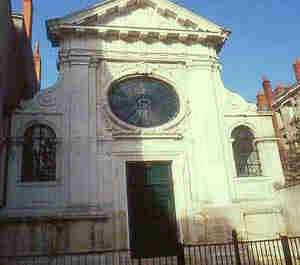
The two edifices I have chosen to illustrate this opposition - luxury for the glory of God (The Jesuits' AMDG) and the Soli Deo Gloria of the Protestants. As it happens, one is a temple in a fairly large city with a strong protestant presence, the other a church in a small provincial town, which used to be a Jesuit intellectual centre.
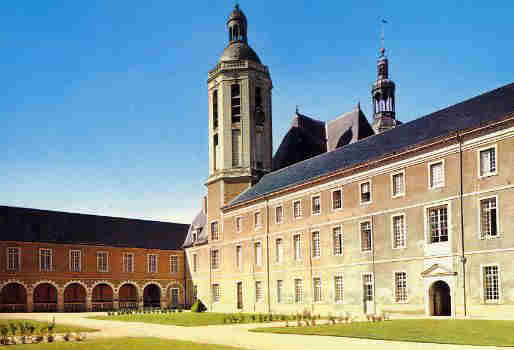
PHOTO CHRISTIAN TOURNEUR
Tower of the Catholic church.The north-west entrance is concealed by the buildings.
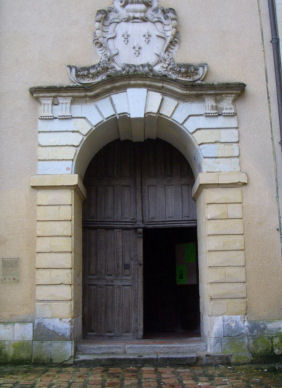
West façade of the temple - Porte nord-ouest de l'église North-west door of the church
PHOTOS CHRISTIAN TOURNEUR
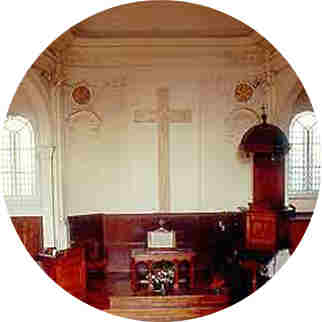
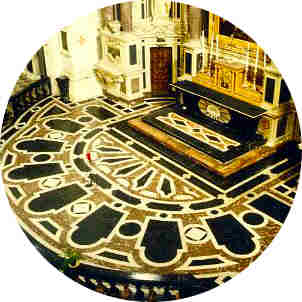
Parquet chancel and altar of the temple - - Marble hancel and altar of the catholic church.
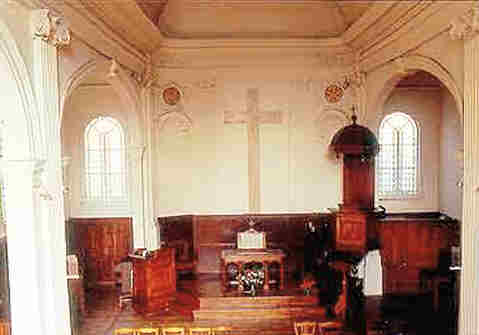
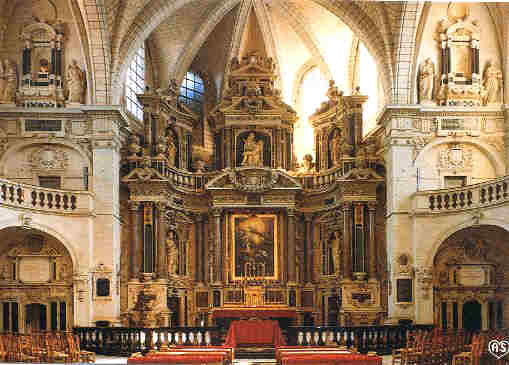
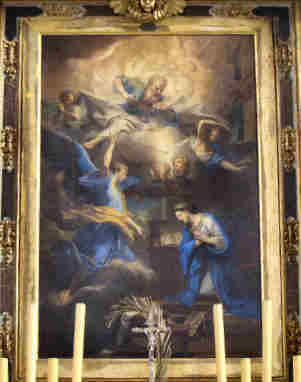
Tableau par les lavallois Pierre Corbineau et Jean Martinet,
PHOTO CHRISTIAN TOURNEUR
Nave, chancel and altarpiece of the Catholic church
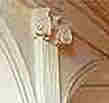
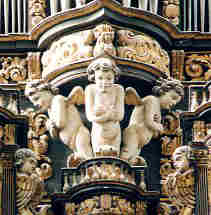
PHOTO CHRISTIAN TOURNEUR
Capitals: Left, temple - right Catholic church