Home › Churches › Pays de la Loire
La Chapelle-Rainsouin
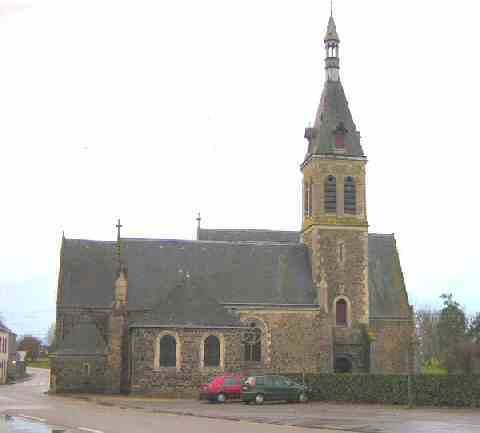
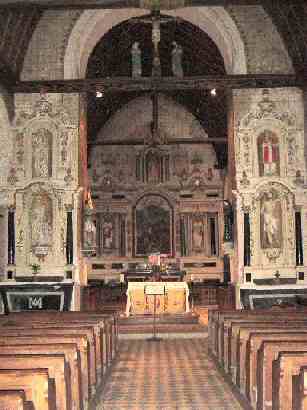
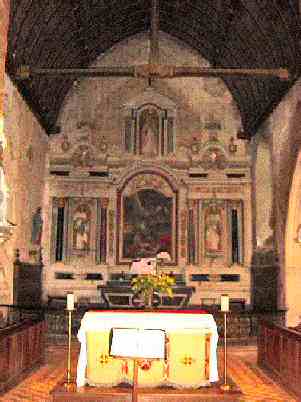
The history of the church, dedicated to St. Sixtus (Pope Sixtus III), ranges from the 11th to the 19th centuries.. The nave dates to the 11th or 12th century; the north and south chapels were added in the 15th and 16th centuries and the whole edifice was restored in the 19th century.
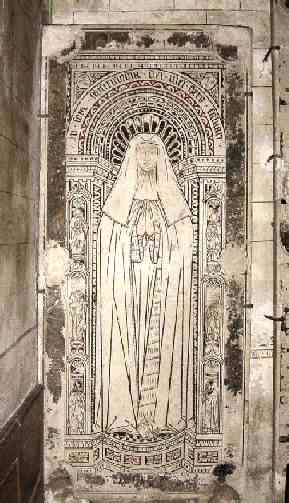
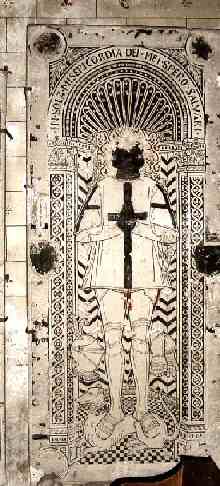
Tombstones of Arthuse de Melun (who died in 1526) and of her husband Olivier de la Chapelle. The stones are of marble and the lines of the drawing have been inlaid with black and red pitch. They bear the inscription: IN SOLA MISERICORDIA DEI MEI SPERO SALVARI: Only from the mercy of my God do I hope for salvation
Olivier de la Chapelle (right) is wearing an emblazoned tunic over a suit of armour. The sollerets are typical of the reign of Louis XII (1498-1515). On his right, his plumed helmet and on his left his gauntlets. A greyhound is lying at his feet. His head is missing. The figure of the deceased is framed by a niche consisting of two decorated pilasters and an arcade bearing the Latin inscription IN SOLA MISERICORDIA DEI MEI SPERO SALVARI. Arthuse de Melun is wearing widow's weeds. The two pilasters framing the deceased are richly decorated with six mourners; two of them have their hands folded, two others have their hands clasped and the last two are holding open books. The arcade bears the same Latin inscription.
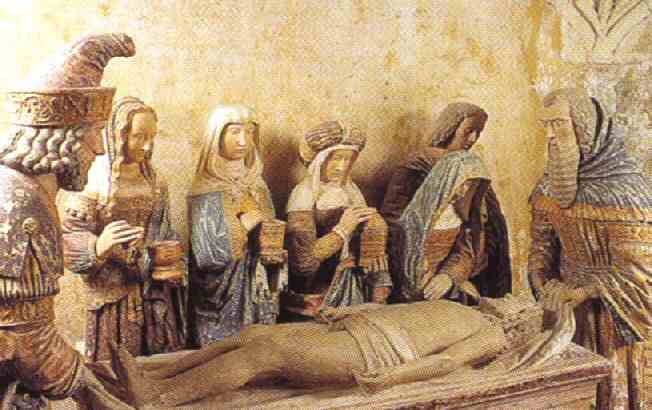
Entombment offered by Arthuse de Melun in 1522. The life-size scene represents Christ lying on his shroud held by Nicomedus and Joseph of Arimathaea. The Holy Women are holding pots and vases of myrrh and aloes. The one holding pot with a lid (centre) may be the donatrix Arthuse de Melun. Behind the Virgin Mary (right) is St. John. Unusually, Christ's head is turned towards the right. The face of Joseph of Arimathaea is noble and distinguished: a high forehead with receding hair, a thin nose and high cheekbones. His long wavy hair are prolonged by a narrow beard. His shoulders are covered with a blue hood with golden fringes. He is wearing a red tunic over his brown robe. The Virgin is leaning towards her son's face. An ample blue cloak covers her head and reveals only part of her face and her pointed nose.A white wimple covers her golden bodice. Behind the Virgin, the juvenile face of St. John. On his right, the first of the holy women, who might be Arthuse de Melun, is holding a closed vase. On her head, a turban adorned with a jewel. The second woman is holding in her left hand an open vase resting on a cloth. A white hood frames her young and pleasant face. The third one, Mary Magdalene, is the finest statue of the group. Her white veil covers a pearl hairnet. Nicodemus is the most picturesque figure. He is wearing a large Jewish bonnet et his shoulders are covered with a capelet
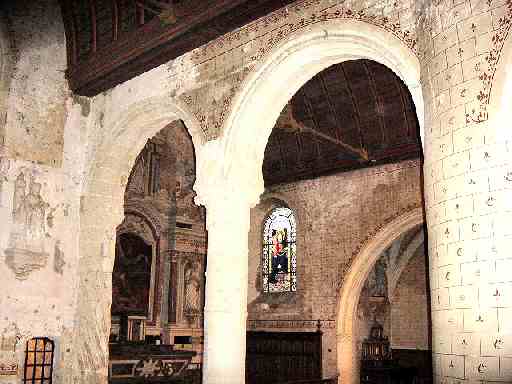
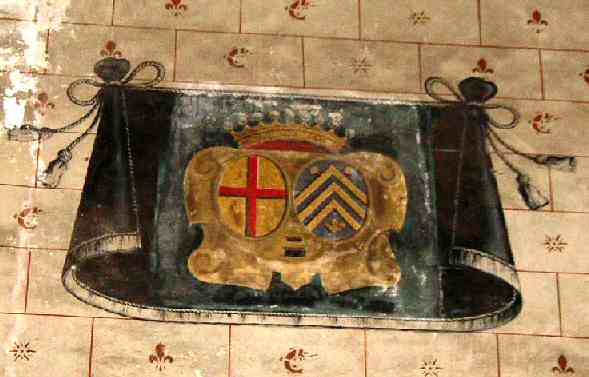
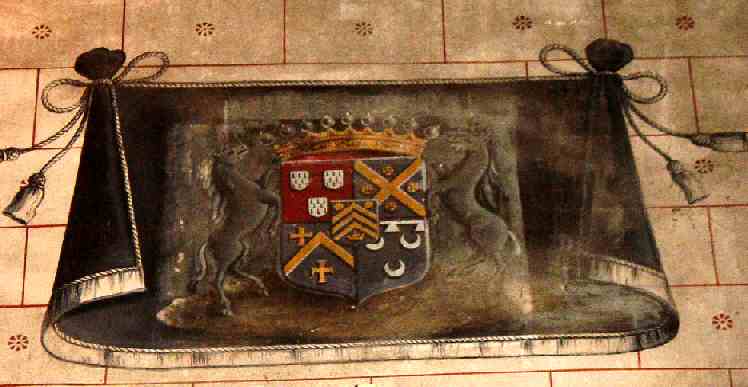
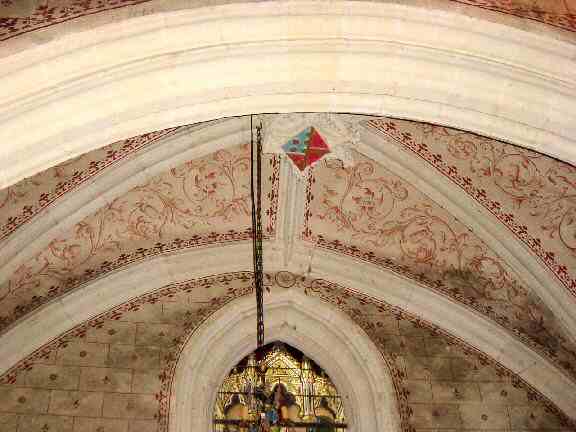
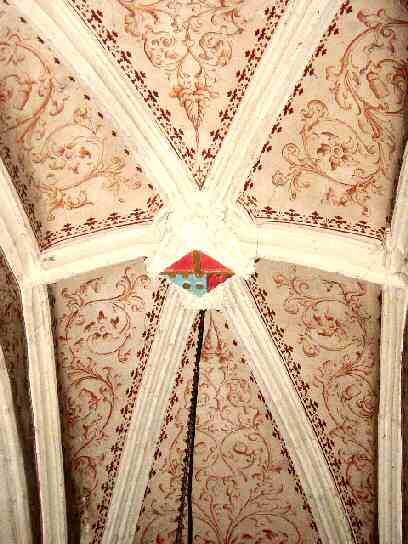
THE WALL PAINTINGS
HOME PAGE
Location and nearby churches
- La Chapelle-Rainsouin 0.0 km
- Saint Léger 6.5 km
- Argentré 6.6 km
- Vaiges 6.7 km
- Montsûrs 7.9 km
- Évron 9.3 km