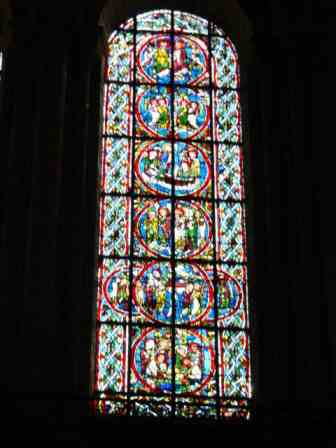
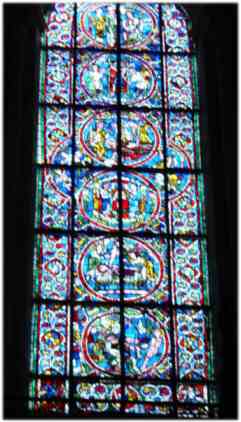
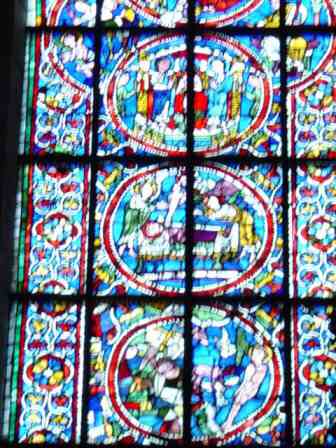
Le Vitrail
STAINED GLASS
Un "vitrail" clôt une baie, généralement une fenêtre, à l'aide de verre à vitre découpé suivant une composition décorative ou figurative et assemblée au moyen de plombs.
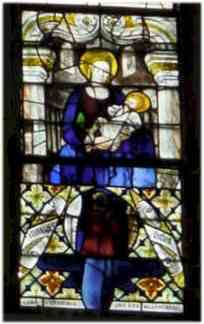
Sablé-sur-Sarthe: Virgin and Child (1495)
"Stained glass" closes an opening, generally a window, with pieces of glass cut out according to a decorative or figurative composition and assembled by means of leads.
The first known example of such compositions of glass and leads, which decorated the lid of a shrine dating back to the Carolingian period, was discovered in France, at Séry-les-Mézières (Aisne). Other pieces show the continuity of the art until the late 16th century. The apogee of the art of the stained glass coincides with the construction of the great cathedrals (from the 13th century). The artists of that time knew that stained glass is above all the art of manipulating light and colour in a closed space. They possessed intuitive knowledge about how the colors change depending on variable light conditions and had applied this knowledge by placing windows with dominantly cold colors in the walls facing North and West and windows with mainly warm colors in eastern and southern walls.
The colours of stained glass of those years were limited to the shades of blue, red, violet and white, which were intensely luminous. The grid of lead beams which keep the pieces of glass together add to the artistic expression by submitting to the principles of composition.
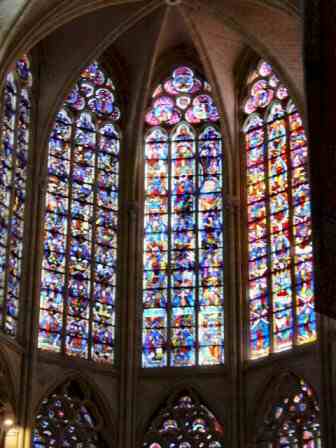
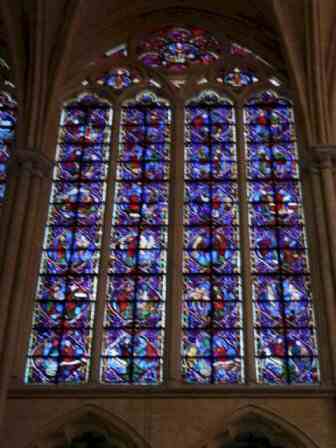
Tours: Saint-Gatien: stained glass windows of the choir (1260-70)
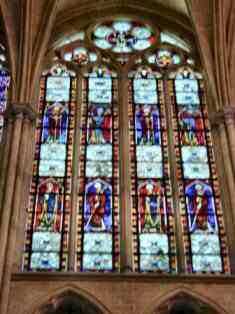
Rochecorbon, Saint George's chapel: 13th-century stained glass
12thand 13th-century stained glass in the cathedral of Angers.