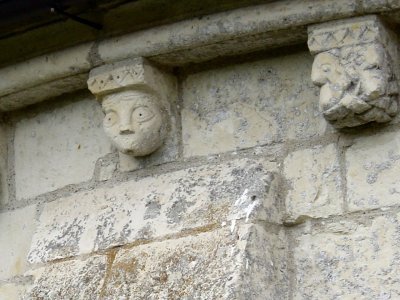
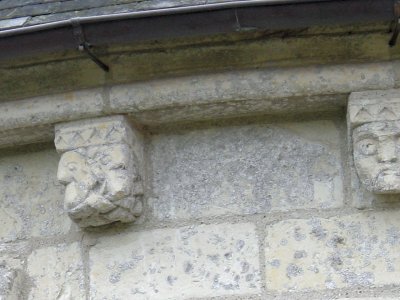
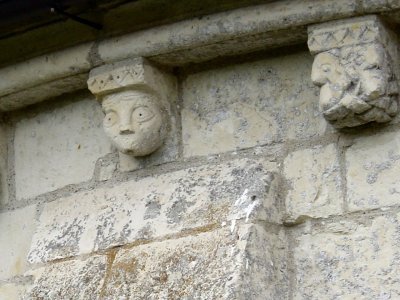
Romanesque corbels
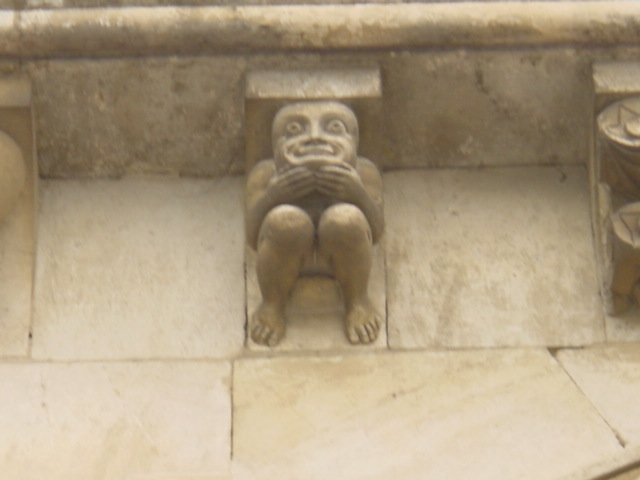
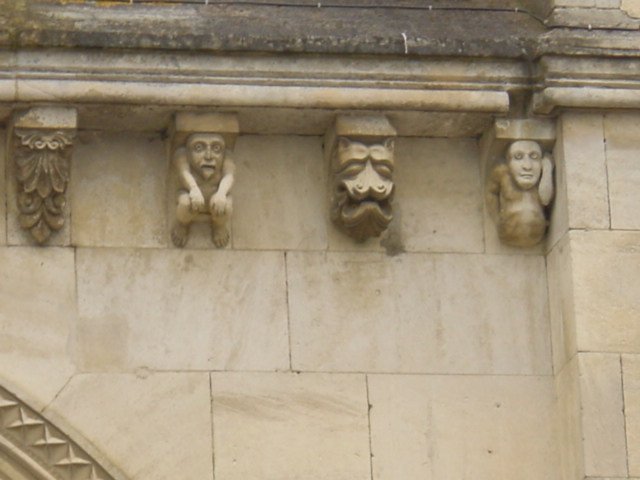
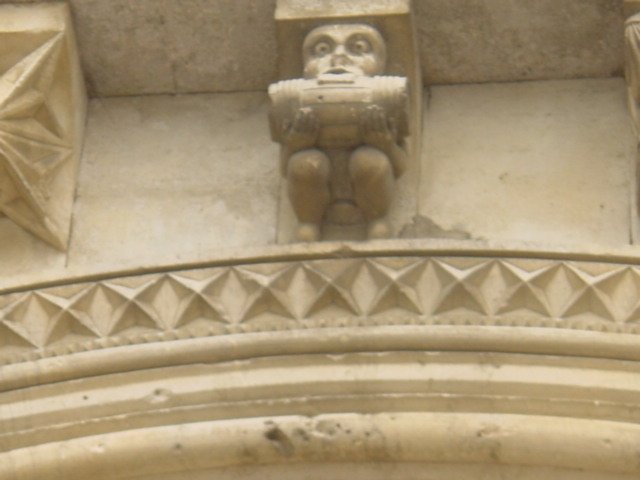
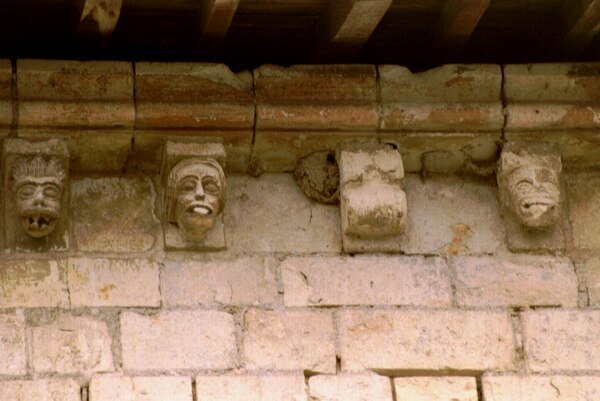
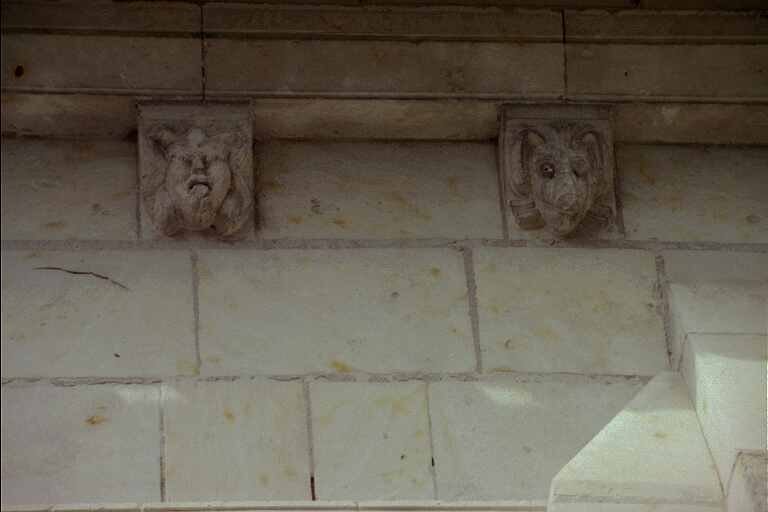
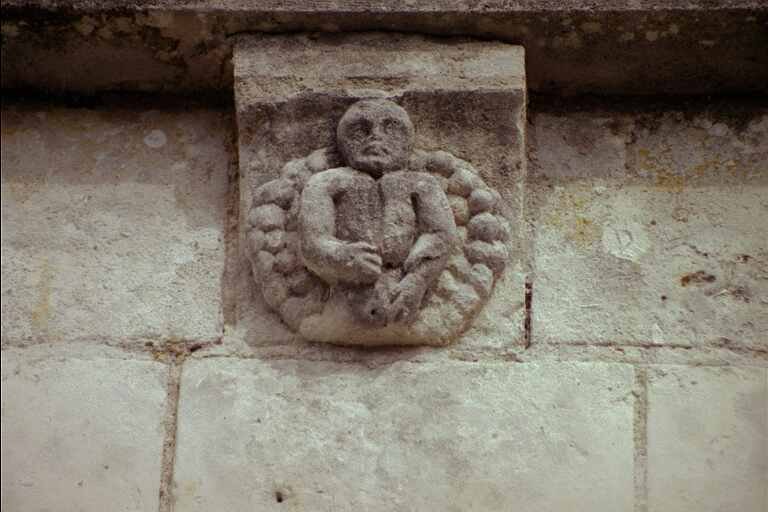
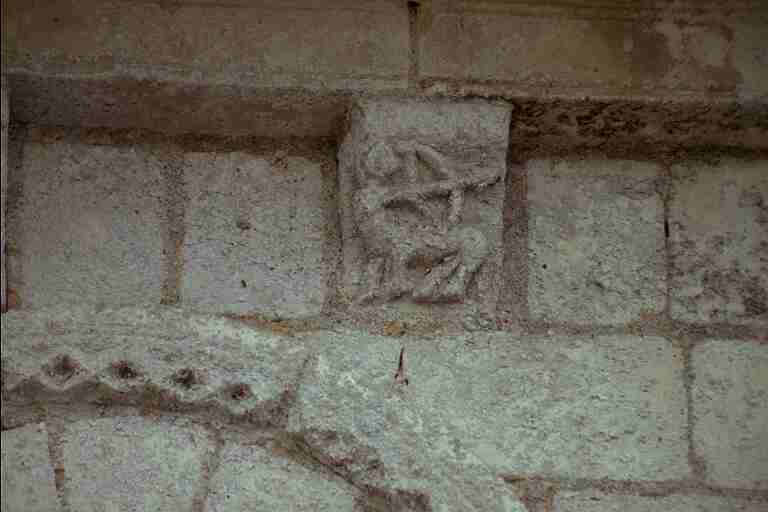
Qu'est-ce qu'un modillon? Situés à l'extérieur de certaines églises romanes les modillons sont des consoles. Ils forment, en général, une sorte de frise horizontale car ils sont la partie visible (faisant saillie à l'extérieur) d'une structure intérieure (charpente du toit, galerie, etc.). Ces blocs de pierre peuvent être sans aucune décoration (on les désigne alors sous le nom de corbeaux) ou sculptés de têtes, de personnages, de monstres, de motifs géométriques, etc.
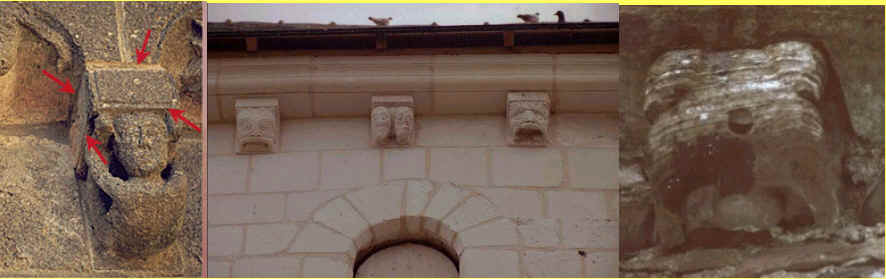
What is a modillion or console figure? Outside some Romanesque churches, modillions are brackets. They usually form a sort of horizontal frieze as they are the visible part (jutting out from the wall) of an internal structure (roofing, gallery, etc.). These blocks of stone may be left undecorated (they are then known as corbels) or carved with heads, figures, monsters, geometrical patterns, etc.
Often hardly visible from ground level, thus escaping the control of the master builder, they express the preoccupations and obsessions of the stone masons more faithfully than the major sculptures of the façade or portal. Some of them are, for the modern observer, very rude or even pornographic. The interpretation of these curious carvings is very difficult since we have no texts describing their purpose. Some will see in them examples of the ribaldry of the common people in the Middle Ages, others edifying symbols.
For example, a man exposing his backside might be the symbol of a "reversal", a complete change, a kind of conversion.
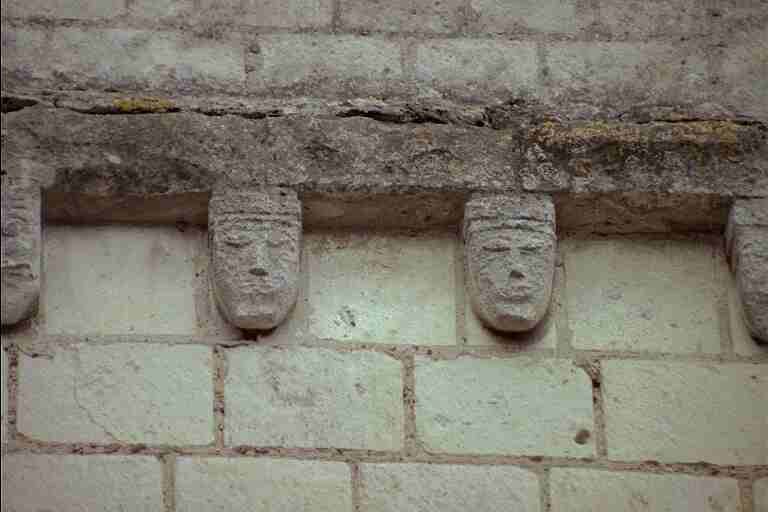
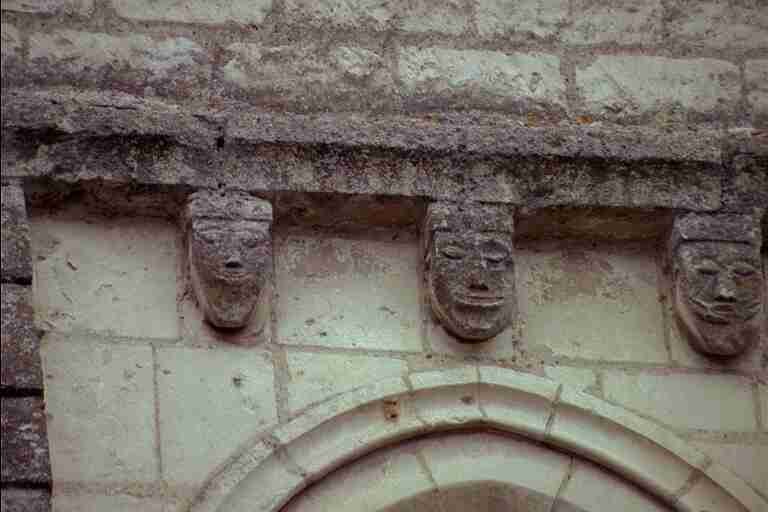
Here are a few examples of console figures in the valleys of the Loir, the Sarthe and the Loire.
1) Eglise de Luché (Sarthe)
Numerous console figures that have been more or less restored over the centuries.
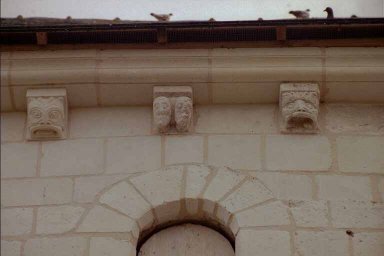
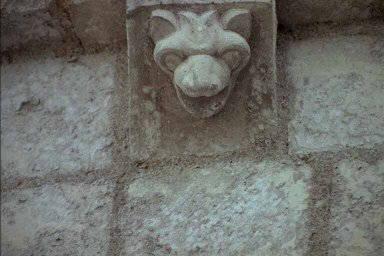
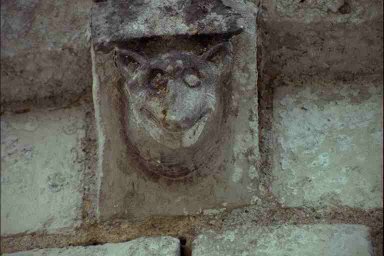
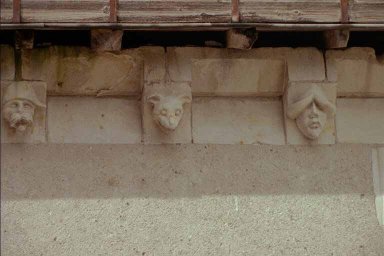
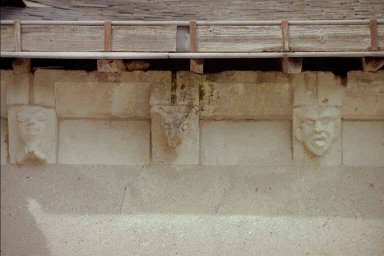
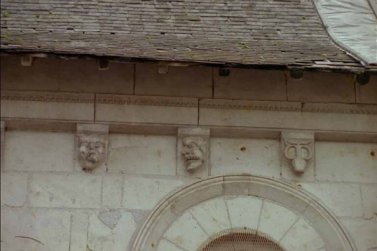
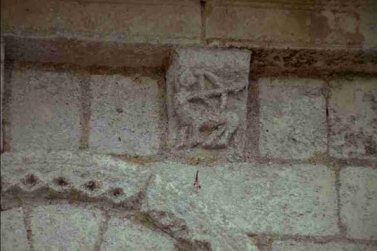
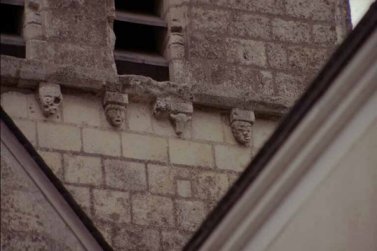
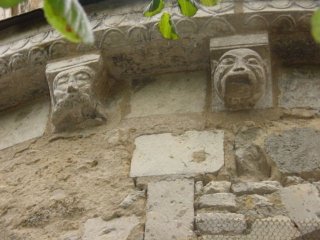
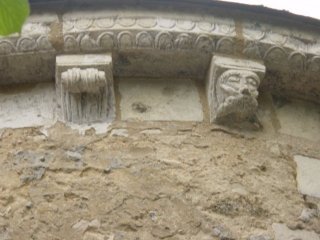
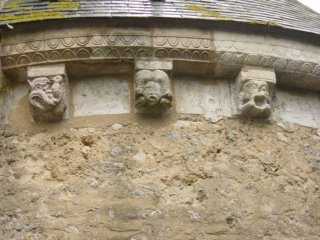
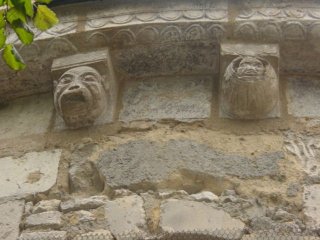
Quelques modillions intéressants de l'église de Broc (Maine-et-Loire)
A few interesting console figures from the church of Broc (Maine-et-Loire)
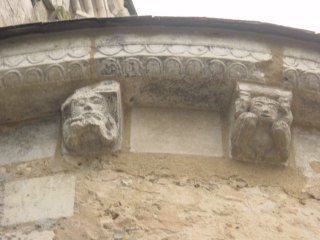
homme.
The snake coming out of the creature's mouth symbolises evil in every man.
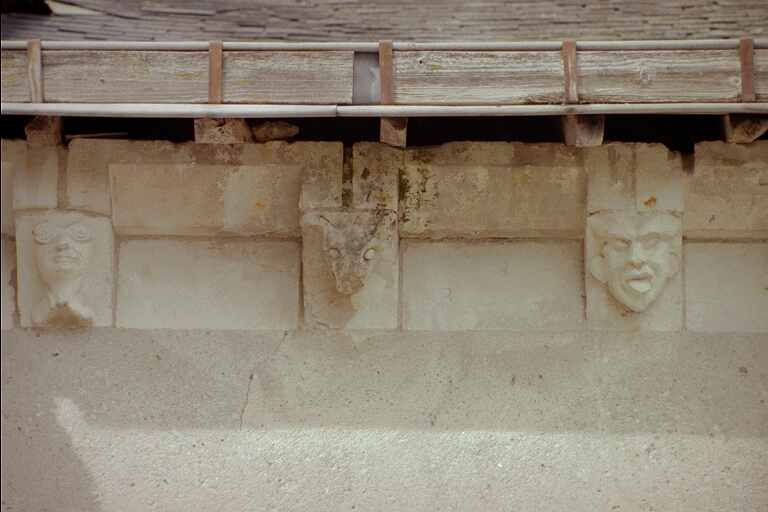
2) Eglise de Château-Gontier (Mayenne)