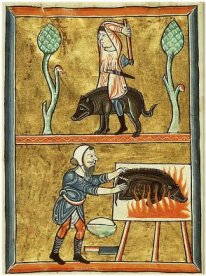
Travaux des Mois
LABOURS OF THE MONTHS
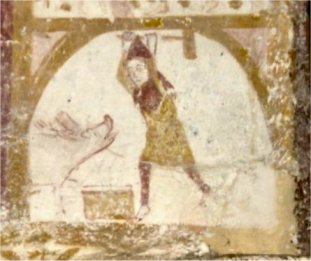
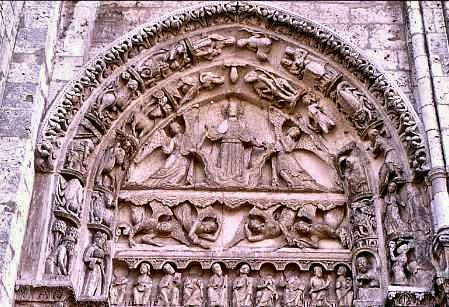
These images illustrating the common activities - usually agricultural ones - for the twelve months of the year, appear in the 12th century. They probably reflect the growing importance of agriculture thanks to the new methods introduced by some monastic orders, particularly the Cistercians. These "calendars" are carved on the arches of church doorways or painted on the intrados of diaphram walls. They are also found in the first pages of the Books of Hours. In England, they sometimes adorn the misericords of choir stalls.
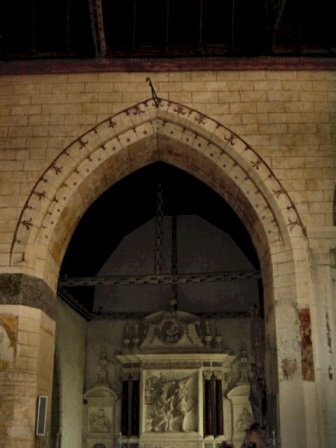
Left: Saint-Christophe-sur-le-Nais: Labours of the Months (intrados of an arcade separating the choir from a chapel)
Right: Chartres; portail royal, left door, upper archivolt.
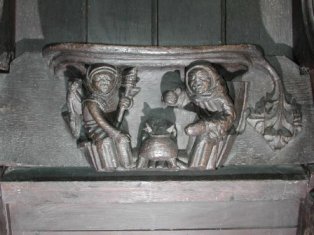
Misericord at St Mary, Ripple, Worcestershire: December (spinning)
These Photos Copyright of the Digital Atlas of England
Each month is illustrated by a relatively standard imagery. There may be local, regional or national variations. In particular, depending on the climate, the activities are sometimes one month ahead in warm climates (Italy, the South of France) or one month behind in colder countries (England).
1) Janvier-January:
No agricultural activity seems to be associated with the month of January, which is illustrated by the pleasures of feasting. A two- or three-faced Janus is sitting at a table on which dishes, knives and pitchers have been arranged. The three faces of the Janus symbolise the past, present and future.
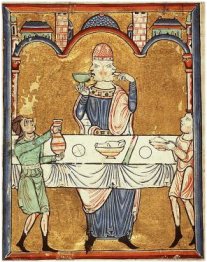
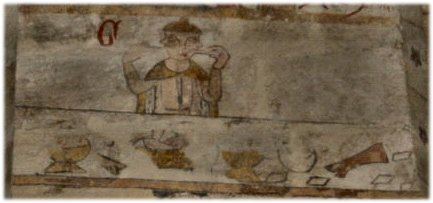
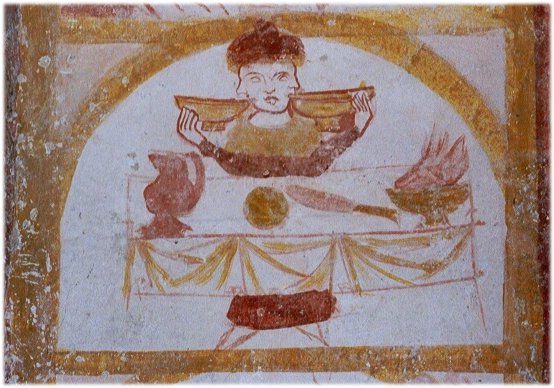
Livre d'Heures-Book of Hours *********** * Saint-Christophe-sur-le-Nais************ Sargé-sur-Braye
2) Février-February:
February is often the coldest month. Its illustration generally shows an old man warming himself in front of a fireplace.
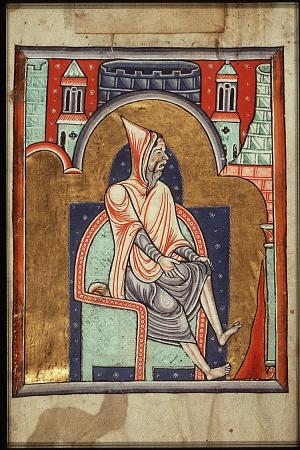
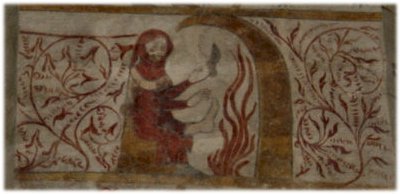
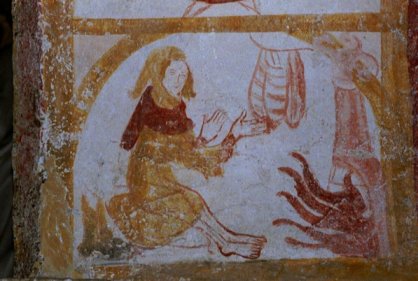
Livre d'Heures-Book of Hours ************* Saint-Christophe-sur-le-Nais *************** Sargé-sur-Braye
3) Mars-March:
March is the time for ploughing in the north of France, for vine pruning or digging in the wine growing south and west.
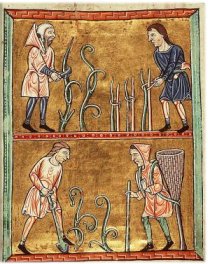
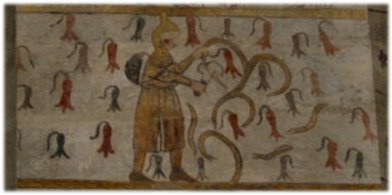
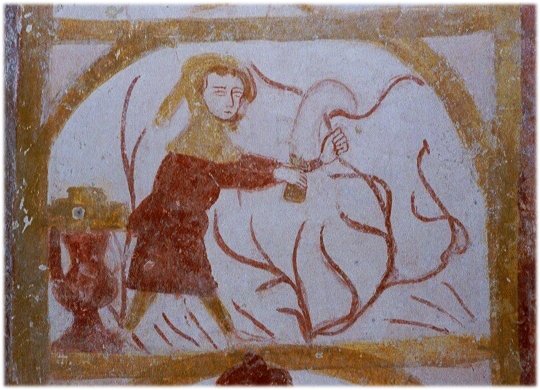
Livre d'Heures-Book of Hours ************* Saint-Christophe-sur-le-Nais *************** Sargé-sur-Braye
4) Avril-April:
April is devoted to gathering the first flowers, aromatic and medicinal herbs.

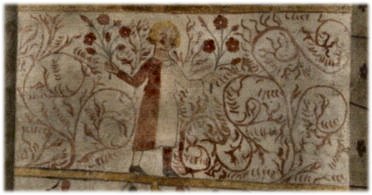
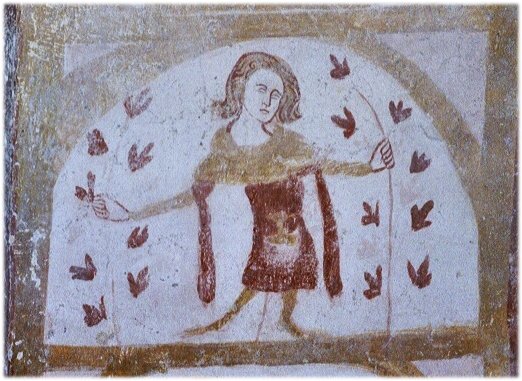
Livre d'Heures-Book of Hours ************* Saint-Christophe-sur-le-Nais *************** Sargé-sur-Braye
5) Mai-May:
May is for hawking or hunting.

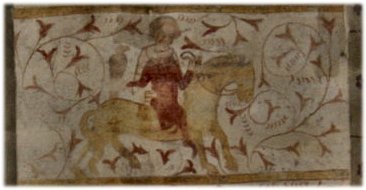
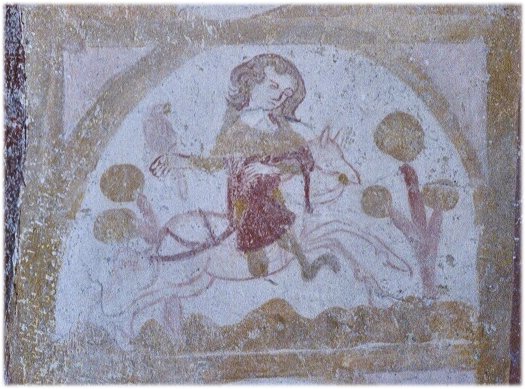
Livre d'Heures-Book of Hours ************* Saint-Christophe-sur-le-Nais *************** Sargé-sur-Braye
6) Juin-June:
Haymaking or shearing begin in late May or in June.
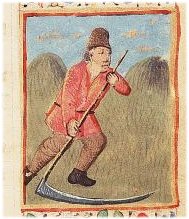
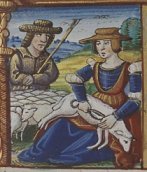
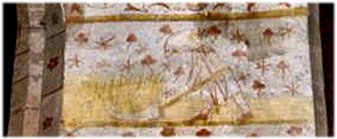
Livre d'Heures-Book of Hours ************* ******************Saint-Christophe-sur-le-Nais
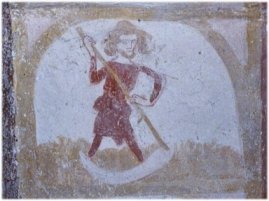
Sargé-sur-Braye.
7) Juillet-July:
Wheat is reaped in July by cutting it halfway up with a sickle. (A scythe was used for haymaking)
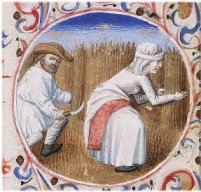
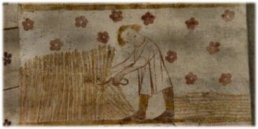
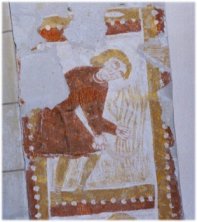
Livre d'Heures-Book of Hours ******* Saint-Christophe-sur-le-Nais *********** Sargé-sur-Braye
8) Août-August:
Wheat is threshed with a flail.
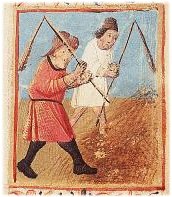

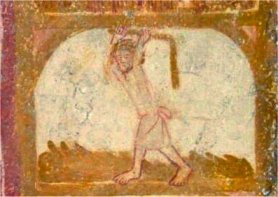
Livre d'Heures-Book of Hours **** Saint-Christophe-sur-le-Nais **************** Sargé-sur-Braye
9) Septembre-September:
In wine growing areas, it is time to harvest the grapes. In other regions Autumn sowing begins.
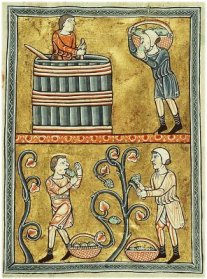
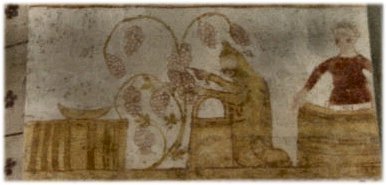
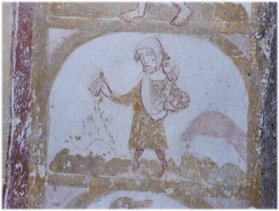
Livre d'Heures-Book of Hours **** ******* Saint-Christophe-sur-le-Nais **************** Sargé-sur-Braye
10) Octobre-October:
The harvested grapes must be treaded.
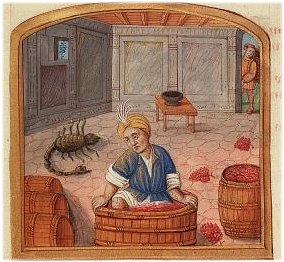
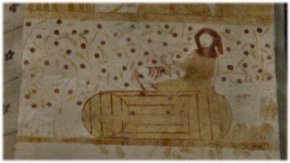
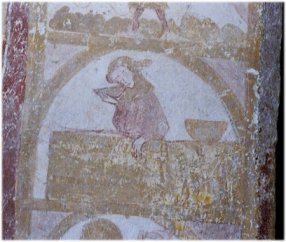
Livre d'Heures-Book of Hours **** ******* Saint-Christophe-sur-le-Nais **************** Sargé-sur-Braye
11) Novembre-November:
In November peasants drive their pigs into the forest and bring down the acorns for the pigs to eat.
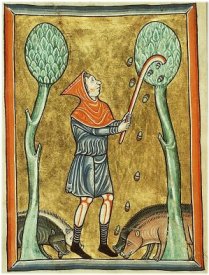
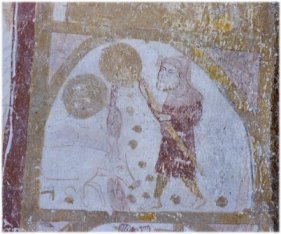
12) Décembre-December:
In December the pig is slaughtered and its flesh salted for preservation.