Home › Churches › Centre-Val de Loire

Varize

Église Saint Piere et Saint PaulEure-et-Loir (28)

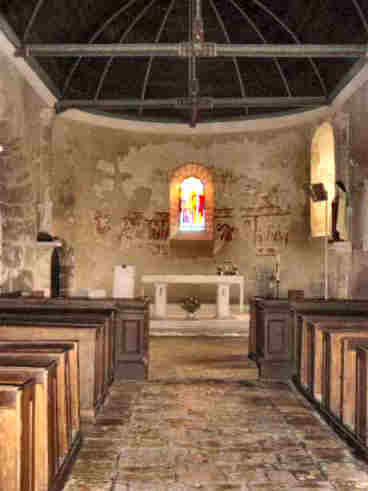
he church of Saint Peter and Saint Paul dates from the 12th century. The apse, which must have been semidomed, is now covered with a sort of domical framing.
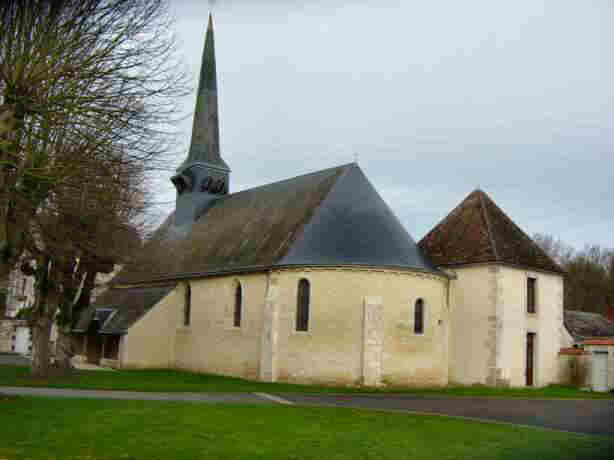
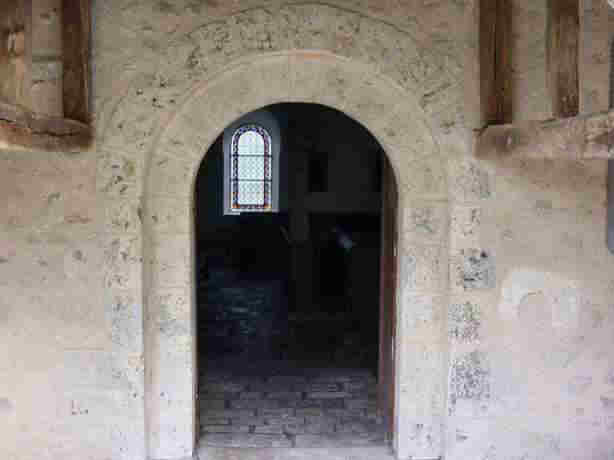
Chevet, south wall and porch
The south door
The south door
The nave and apse
The nave and apse

THE WALL PAINTINGS

They date back to the 12th or 13th century and must have covered the entire church. A few very original and sometimes unique fragments remain.
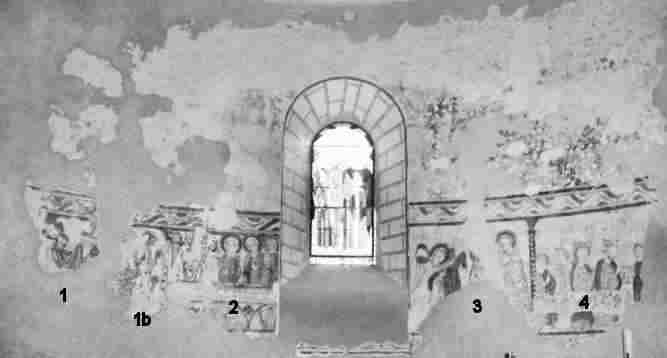
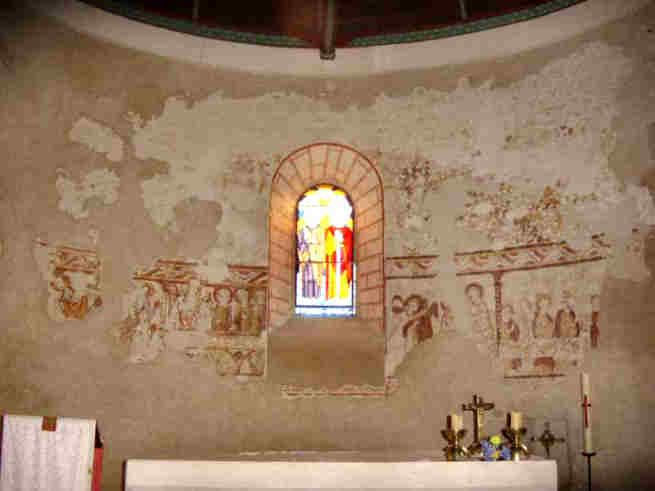
Deposition from the Cross * - Deposition from the Cross with tree * - The Holy Women at the Tomb * - The Baptism of Christ * - The Feast of Herod
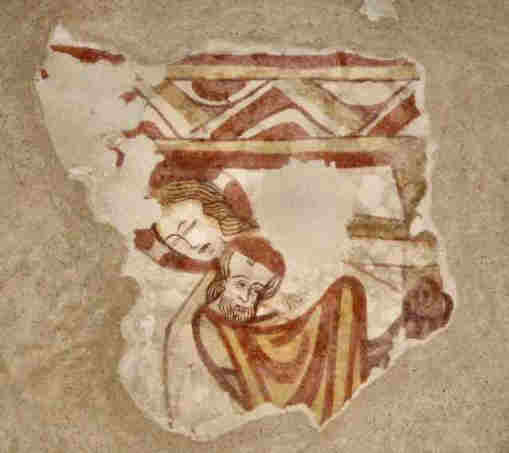
1) - Deposition from the Cross:
Christ and Joseph of Arimathaea. Christ's head is lager than Joseph's. Both have long fair and wavy hair. Out of respect, Joseph has concealed his hands under his cloak. Christ's face has an unusual beauty.
Varize, Église Saint Piere et Saint Paul

Deposition from the Cross: Nicomedus is about to free the left arm and the feet of Christ, but his hands are no longer visible. Usually, Saint John stands behind Nicomedus. Here, he has been "replaced" by a tree. There is no other known example of the representation of a tree in a Depostion of the Cross scene.

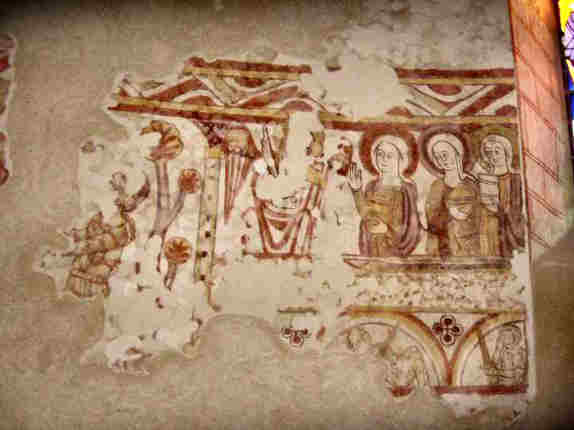
2) The Holy Women at the Tomb
Varize, Église Saint Piere et Saint Paul

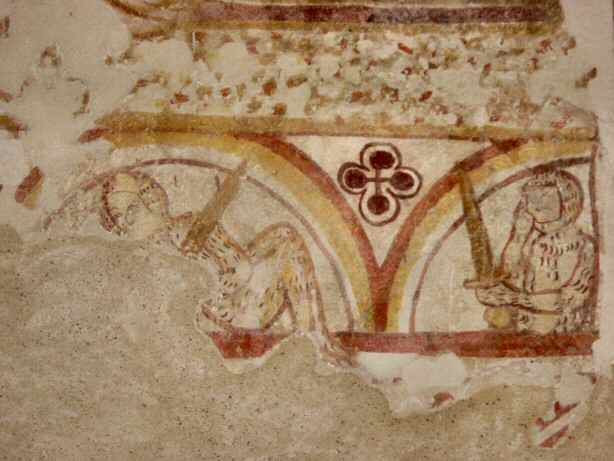
The Holy Women at the Tomb: from left to right, the bell of a capital, an angel holding a palm in his right hand and the shroud, the three Holy Women. The sarcophagus is dotted with small coloured spots imitating marble. Under the sarcophagus, the two sleeping guards.
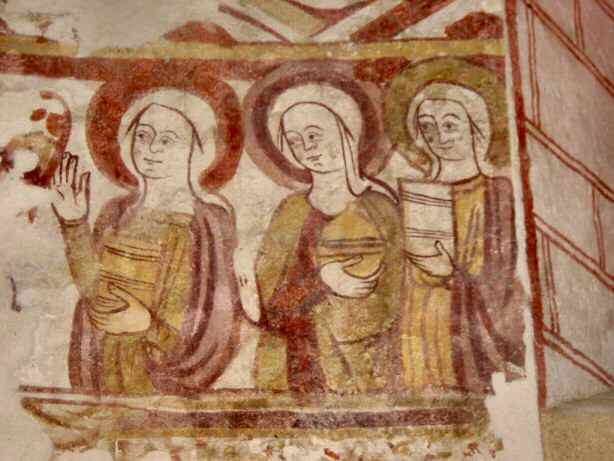
The three Holy Women are wearing white veils, their haloes are orange (left), pink and brown (centre) and yellow (right). Each woman is carrying a perfume vessel, one ot them spherical the other two cylindrical.
The two sleeping guards

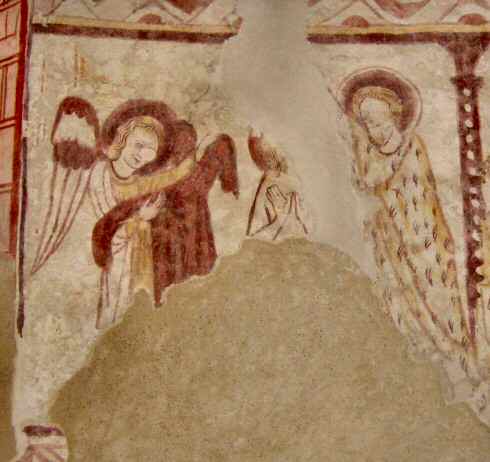
3) The Baptism of Christ:

Left, an angel is holding the red tunic with both hands - centre, Christ whose palms are turned outwards and whose thumbs touch. - right, Saint John the Baptist wearing a cloak made of animal skins.

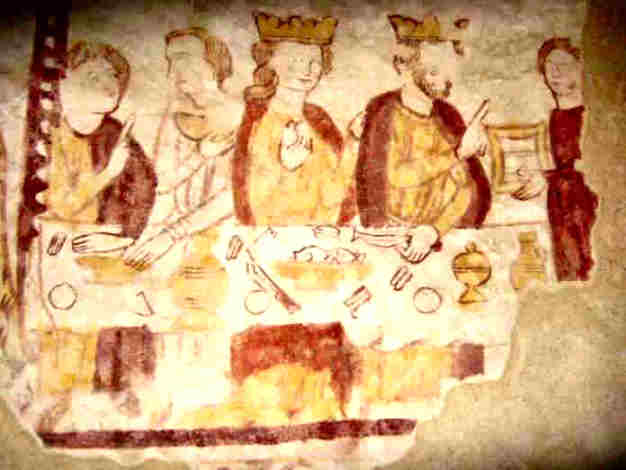
4) The Feast of Herod:

Varize, Église Saint Piere et Saint Paul

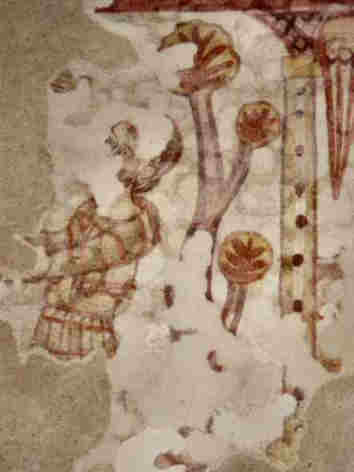
The Feast of Herod is usually represented in its initial phase: the dance of Salome or in the more gruesome stage, when Salome brings the Baptist's head on a charger. Here, the artist chose an intermediate scene: at the end of her dance, Salome walks up to Herod with a musical instrument, which looks like a lyre. On the table, little sticks in groups of two or three have not been identified. At the centre, a dish, which probably contains one or two chickens.

Location and nearby churches