Home › Churches › Bretagne
Langon
Chapelle Saint-Venier Ou Saint-AgatheIlle-et-Vilaine (35)
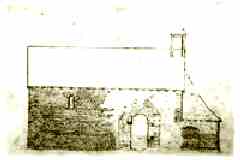
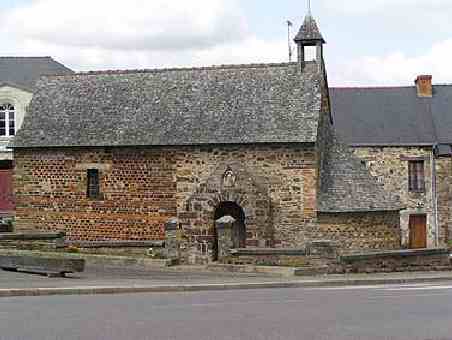
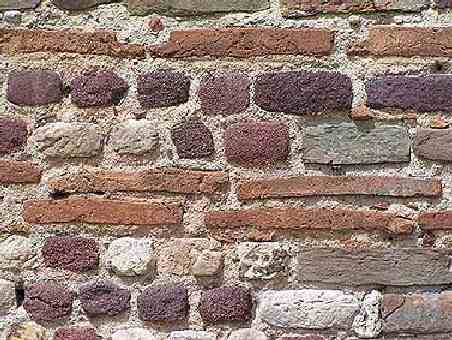
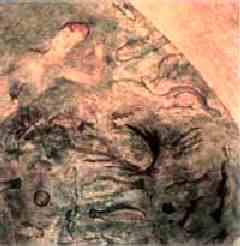
A Roman temple or funerary monument dedicated to Venus, the dating of the shell of the edifice varies from the 2nd to the 5th century. In the 9th century, the temple / tomb was converted into a chapel dedicated to St. Venier ("Ecclesia Sancti Veneris" = of St. Venus). In the 12th century, the St. Venier chapel was renamed St. Agatha. In 1839, a 4th-century fresco was discovered in the chapel. It represents a naked woman combing her hair on the waterside and Eros riding a dolphin. It might represent Venus Leaving the Bath or an Armorican fairy. According to another theory, it might be what is left of a Gallo-Roman villa, whose baths, decorated with this Venus and Eros fresco, was converted into a baptistery. In the early centuries of Christianity, Roman temples were often converted into churches or chapels and the worshipping of pagan gods was more or less tolerated during a transitional period. The presence of of an in situ Roman fresco in a Christian chapel is extrememy rare.
Discovered in 1839, it illustrates two themes of the iconography of Venus: "Venus Leaving the Bath" (her left arm rearranging her wet hair and the "Birth of Venus". Venus is accompanied by Eros riding a dolphin. The dark-blue backdrop is scattered with fish and shellfish.
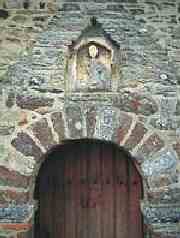
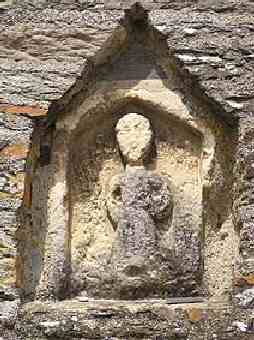
St. Agatha is the virtuous antithesis of Venier (Venus). Agatha, a Sicilian virgin and martyr was lusted after by Quintianus. She refused . In fury , consul Quintianus ordered that her breasts be cut off. 'Impious, cruel, odious tyrant!' Agatha cried. 'How could .you do this? Are you not ashamed to take from a woman what your own mother gave you to suck? No matter: I have other breasts you cannot have, breasts that give spiritual nourishment to all my senses, and them I dedicated long, long ago to God.' (The Golden Legend by Jacobus de Voragine). The following night, St. Peter appeared to Agatha and gave her back her breasts. A few days later, she died on a bed of live coals.