Saint-Méen-le-Grand
Eglise Saint-Méen
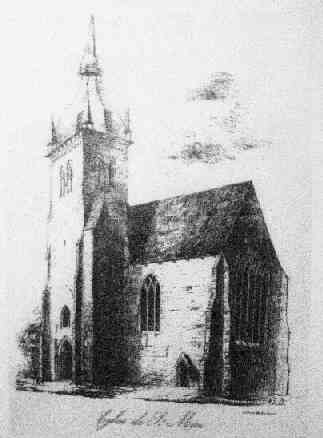
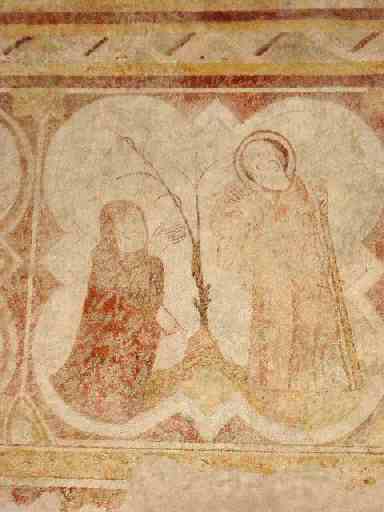
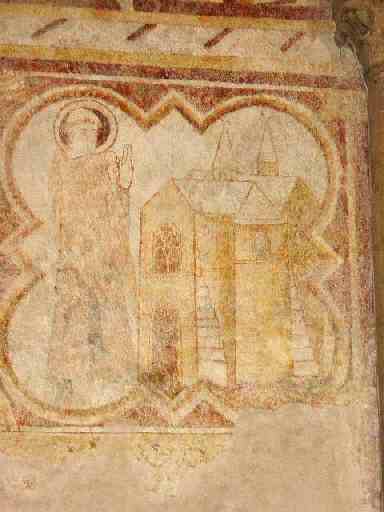
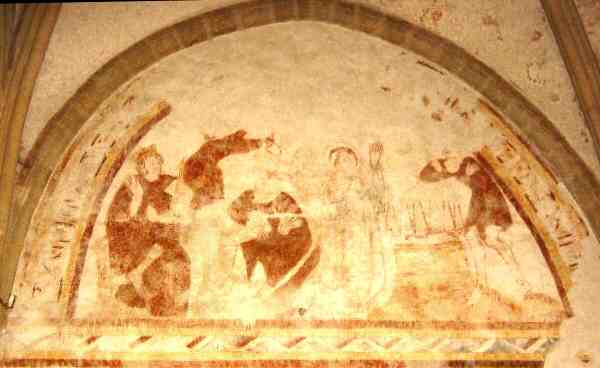
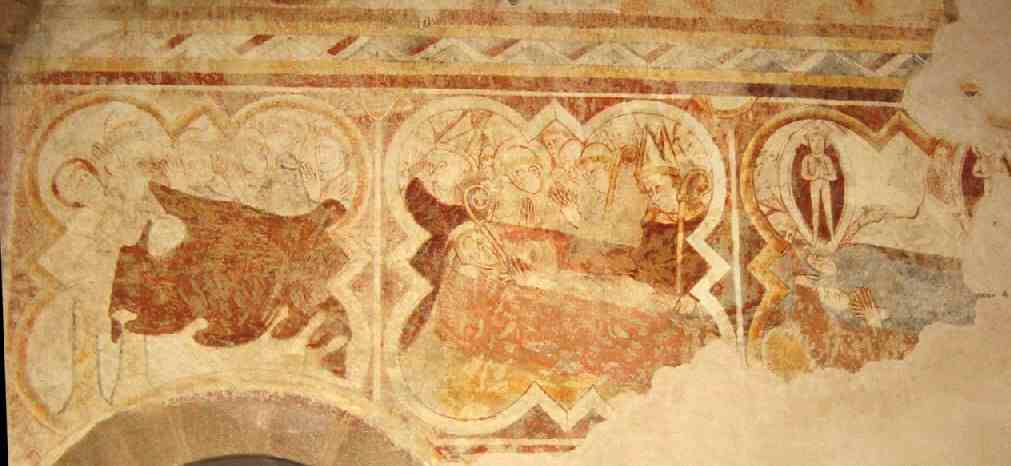
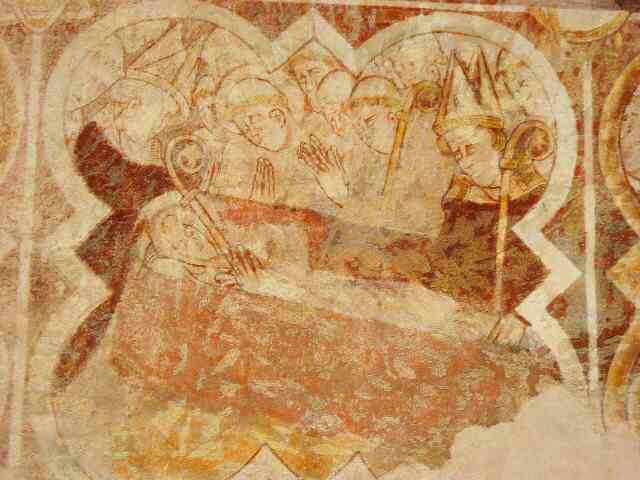
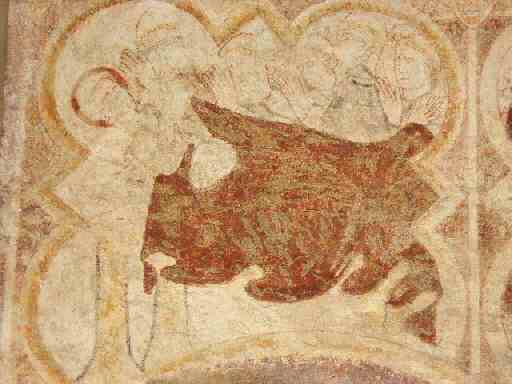
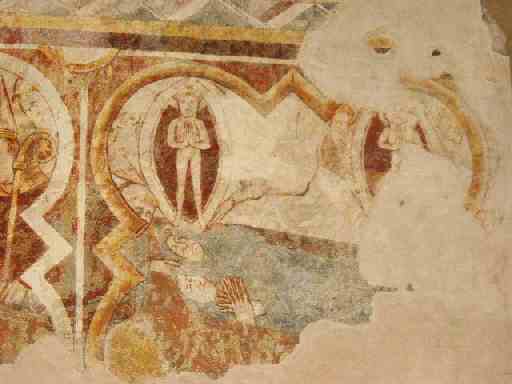
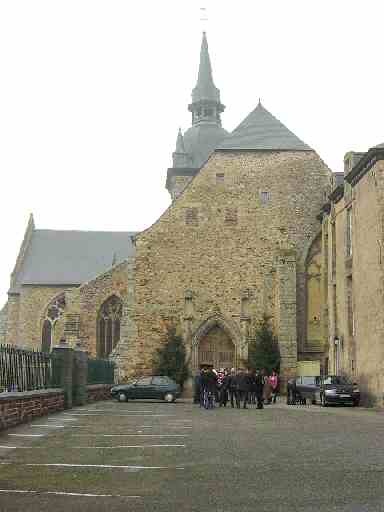
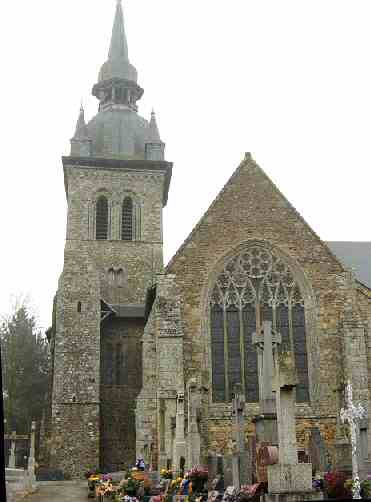
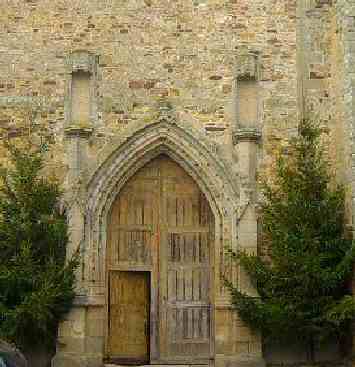
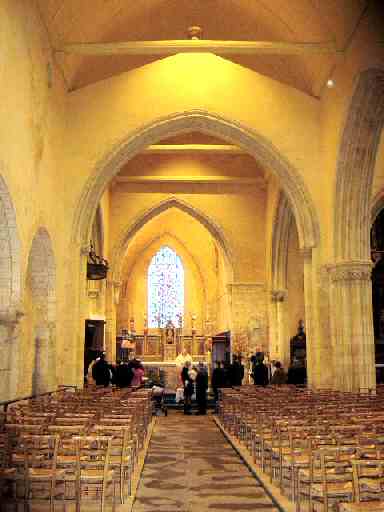
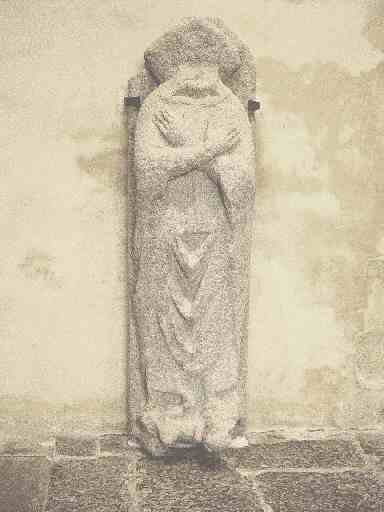
The name Méen (Mewan) is pronounced like the French word for hand, "main", so pilgrims used to wear a hand-shaped piece of cloth sewn on their clothes or hat. The former abbey church dedicated to St Méen is of Romanesque origin: a wall and the tower date to the 12th century. The chancel and chevet are Gothic (13th century). The former chapter house, next to the north wall of the nave, is decorated with wall paintings relating the life and death of St Méen
THE WALL PAINTINGS
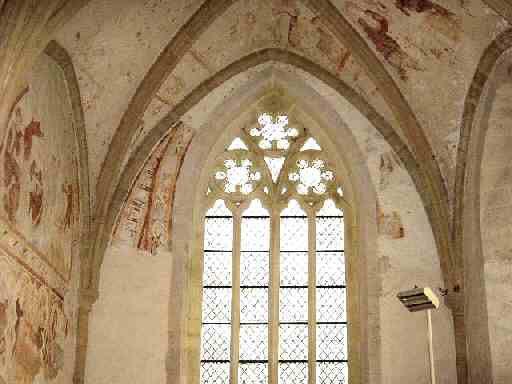
Meen: also known as Maine; Mavenus; Mevenus; Mewan. Born in Gwent (Wales), disciple of Saint Samson. Latin name "Mevennus", from Breton "mau" (young). Celebrated on 21 June . Invoked for brain diseases. Followed Saint Samson from Wales to Brittany in 545, accompanied by his godson Saint Austol. Evangelized the Broceliande district. Founded the monastery of Gael that was later named for him.
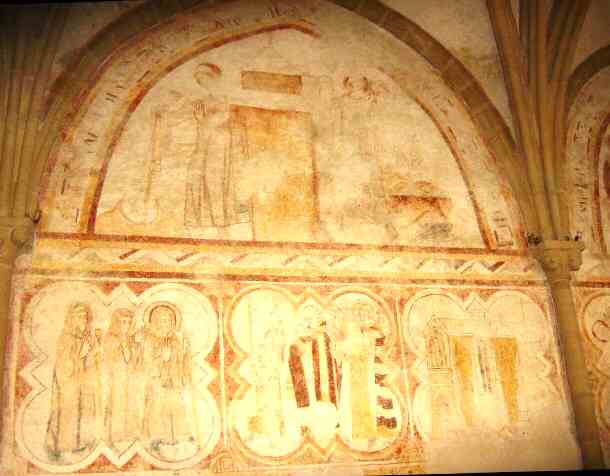
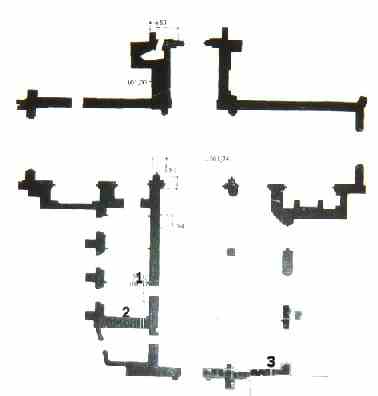
Lower register: St Meen is returning from a pilgrimage to Rome (left); he is stopped by monks from Angers (centre); the monks ask him to found a monastery (right)
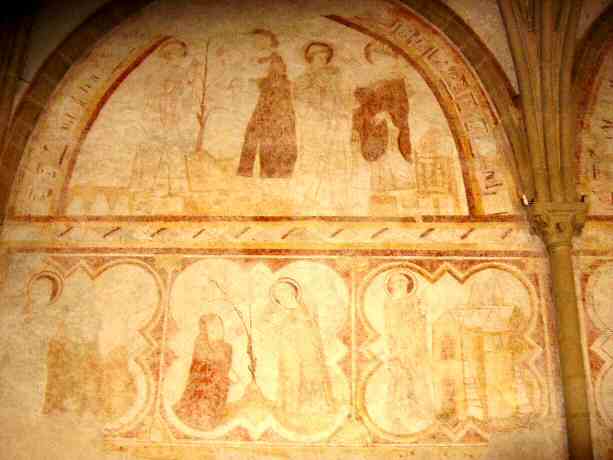
Lower register: (centre) the woman from Angers beseeches St Meen to rid her domain of a monstrous serpent. On the right, one of the Saint's foundations; the left panel is illegible