Home › Churches › Pays de la Loire
Saulges Église Saint-Pierre
the church is open to the public from 9am)
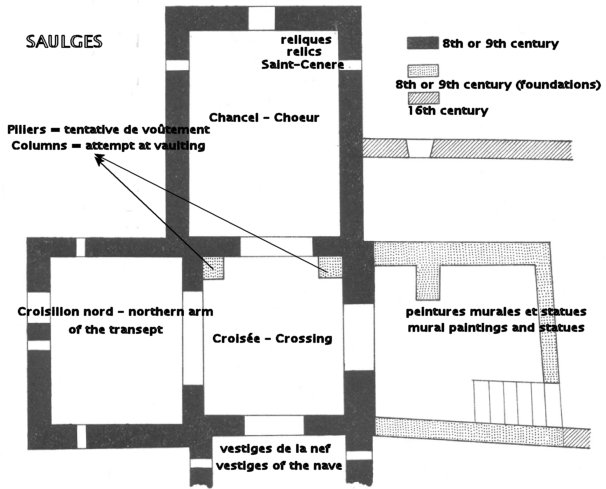
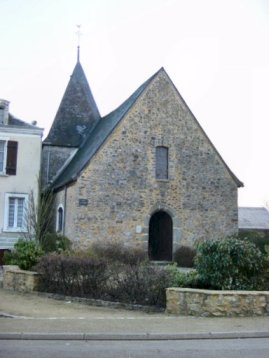
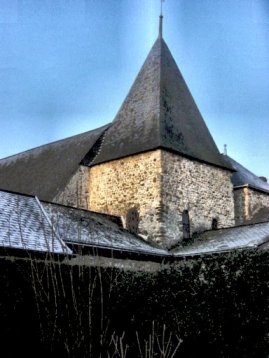
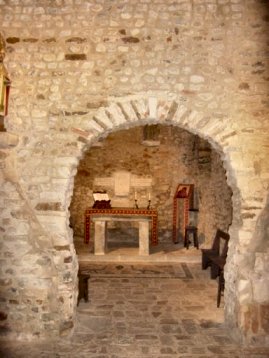
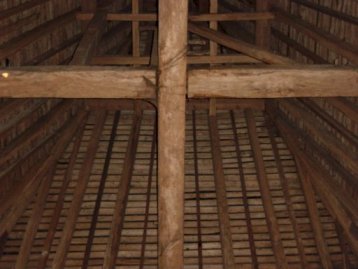
The church was built over a Merovingian burial ground, which was in use between the 5th and the 8th centuries. Dating back from the 8th or 9th century, it is one of the very few examples of pre-Romanesque churches in western France. Originally, the edifice was composed of a short nave, a transept with its crossing and a square choir. Today, the nave and the southern arm of the transept have disappeared and a chapel was added east of the site of the northern arm of the transept, in the 16th century. The crossing is not vaulted (the roof frame is apparent) but two truncated columns suggest an unsuccessful attempt at some sort of vaulting (the walls were too thin to support the weight of a vault).
1)
Entrance: on the right, three medival mural paintings and a Virgin and Child. The present structure rests on the vestiges of the southern arm of the transept, which are visible a few feet below. On the ground plan, you can see the steps that give access to the pre-Romanesque edifice. The presence of a low wall with an east-west orientation has not been explained. This part of the church is decorated with the statues of Saint-Michael and Saint- Barbara
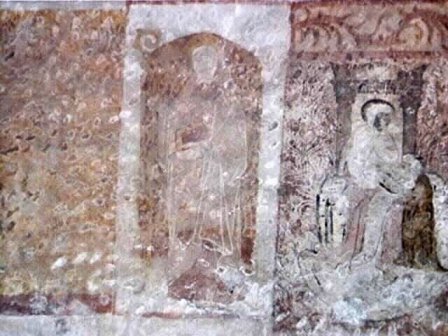
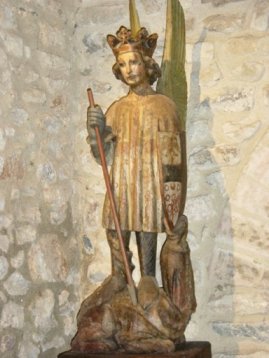
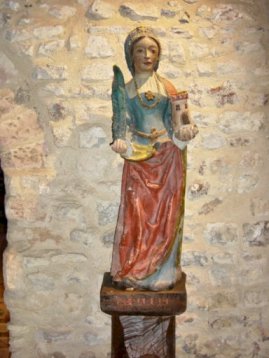
Saint-Michael and Saint-Barbara and her tower
Straight in front of you is the crossing, dating back to the 8th or 9th century. The mosaic, representing the keys of Saint Peter was added later.
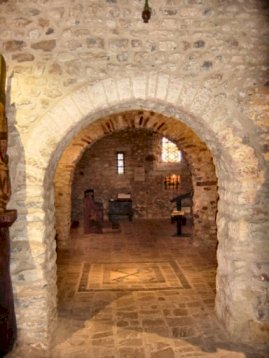
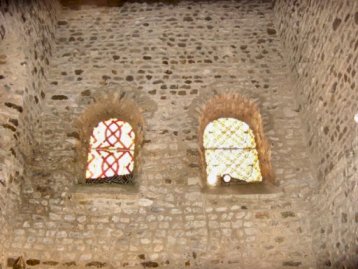
3) the chancel:
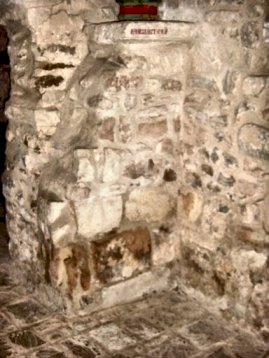
Left: Column indicating an attempt at vaulting the crossing
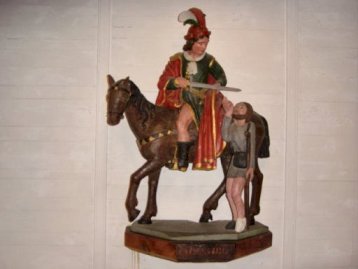
Right: statue of Saint-Martin
SAINT-MARTIN: Bishop of Tours, (316-400)
While stationed at Amiens in France in 337, a semi-naked beggar approached him in bitterly cold weather. Martin's name became immortal at that moment, for he sliced his military cloak in two and gave half of it to the starving man. That night in a dream he saw Jesus wrapped in the half of the cloak that he had given away. Jesus said to him, "Martin, yet a catechumen, has covered me with this garment." Following this dream, he "flew to be baptized."
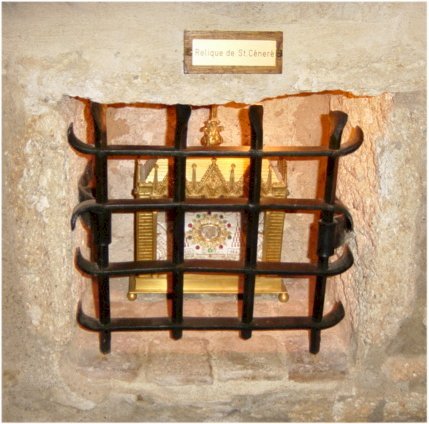
Saint Cenere, born near Rome in the 7th century, arrived at Saulges (Salvia) in 649 accompanied by his brother Saint Ceneri. He devoted his life to praying and doing penance. The miraculous spring that soon began to flow is still flowing at his hermitage of Saint Céneré, on the bank of the river Erve. He is also said to have founded the church of Saint-Pierre in Saulges.
Location and nearby churches
- Bannes 4.7 km
- Cossé-en-Champagne 6.5 km
- La Bazouge-de-Chemeré 7.5 km
- Saint-Denis-du-Maine 8.4 km
- Vaiges 9.4 km
- Auvers-le-Hamon 9.6 km