Home › Churches › Centre-Val de Loire
Chinon
I)SAINT-MEXME COLLEGIAL CHURCH
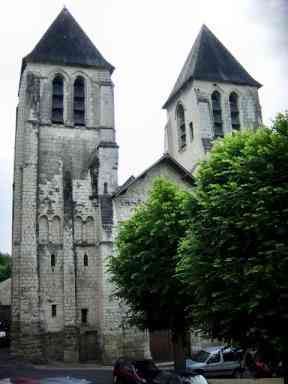
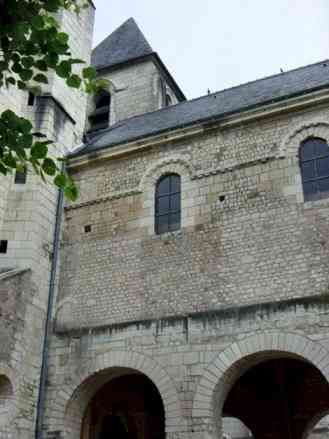
The original collegial church dates back to the 5th century but was destroyed by fire in 943. The only parts that remain of the 10th- and 11th-century construction are the central nave, a chapel in the northern arm of the transept, the narthex and its two towers. The church underwent alterations in the 12th and 15th centuries.
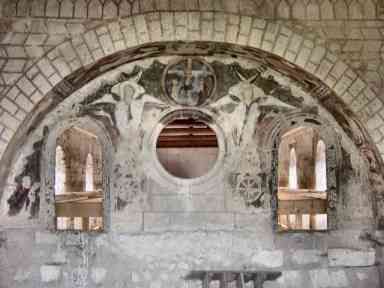
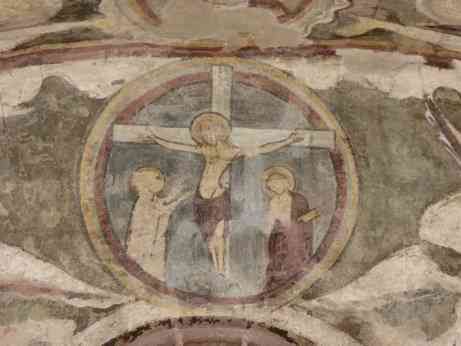
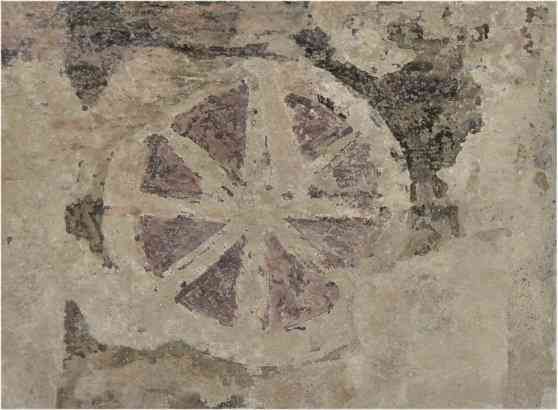
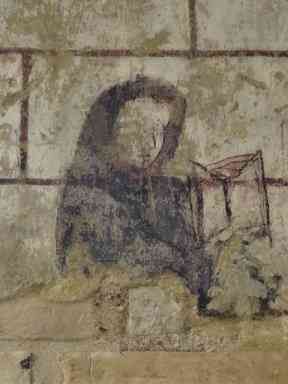
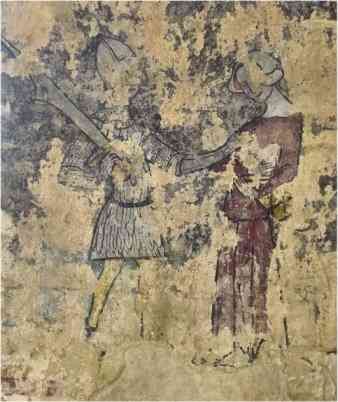
Partition wall separating the loft from the nave: Vision of Ezekiel: Now, as I beheld the human creatures, behold one wheel upon the earth by the living creatures, with his four faces. The appearance of the wheels and their work was like unto the colour of a beryl: and they four had one likeness: and their appearance and their work was as it were a wheel in the middle of a wheel. (Ezekiel I; 15-16)
II) - SAINTE-RADEGONDE CHAPEL:
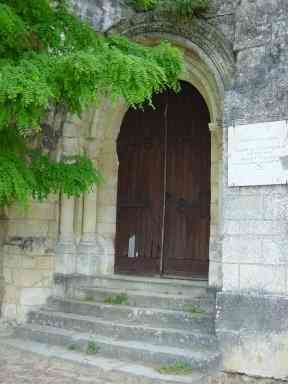
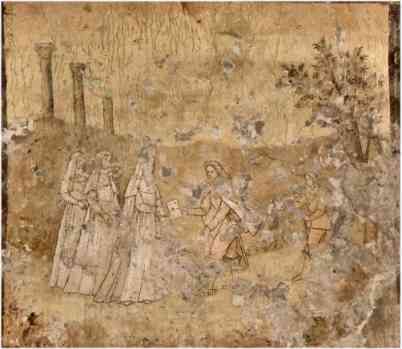
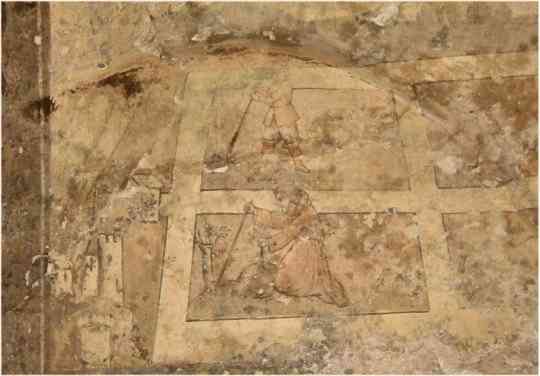
The troglodytic chapel was used as a hermitage by John the Recluse (Jean le Reclus) in the 6th century. Saint Radégonde visited him. A wall niche was carved out of the rock round the hermit's tomb in the late 12th century. The wall paintings were executed at that time or, at the latest, in the very early 13th century.
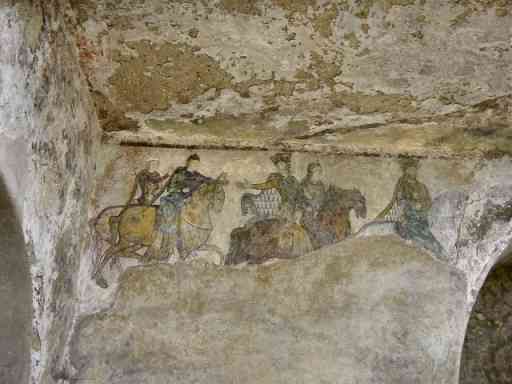
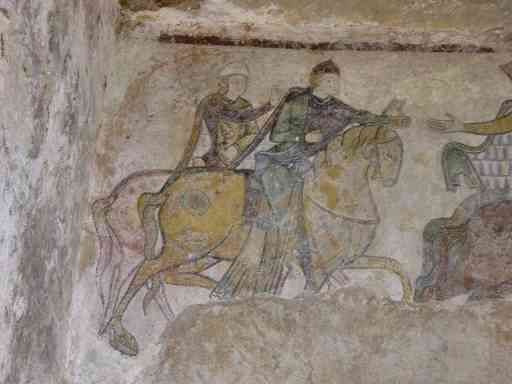
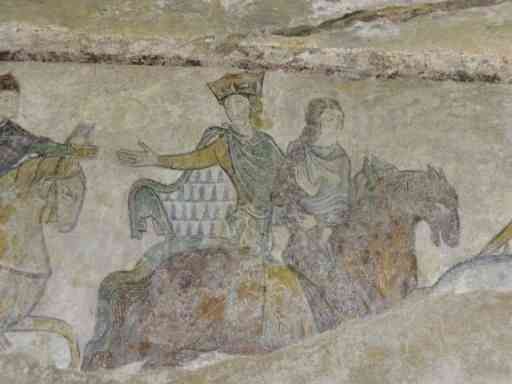
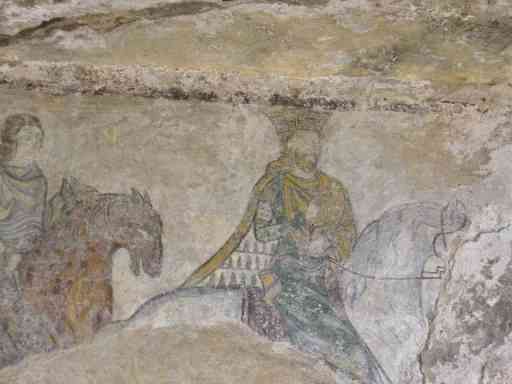
Cavalcade (1200): from left to right: the first rider is wearing a conical bonnet and holding the reins of his horse in his left hand. With the index of his right hand he points at the other riders. The second rider (in the foreground) is leaning forward. He is holding the reins of his mount in his right hand. A bird of prey is perched on his gloved left hand. The third rider, wearing a crown and a fur-lined cape, is turning towards the second rider, holding out his hand. On the same horse, a bare-headed woman is looking straight ahead and beckoning to the rider in front of the cavalcade. The crowned rider in front, is pointing the index of his right hand eastwards. The most plausible interpretation of the scene - but not the only one - is the following: Eleanor of Aquitaine (the second crowned head) is bidding farewell to her children (Richard Lionheart, Henry and Joan) after being summoned back to England by Henry II Plantagenet.
Location and nearby churches
- Cravant-les-Côteaux 7.2 km
- Rigny-Ussé 10 km
- Tavant 12 km
- Loudun 20 km
- Saumur 27 km
- Abbaye du Loroux (Vernantes) 30 km