Home › Churches › Centre-Val de Loire
Chabris
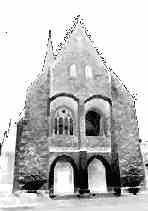
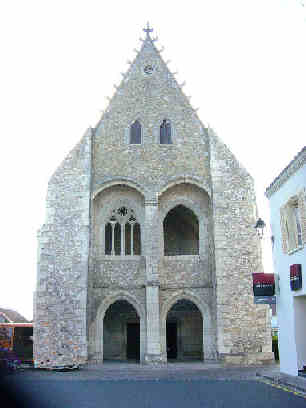
EGLISE SAINT-PHALIER
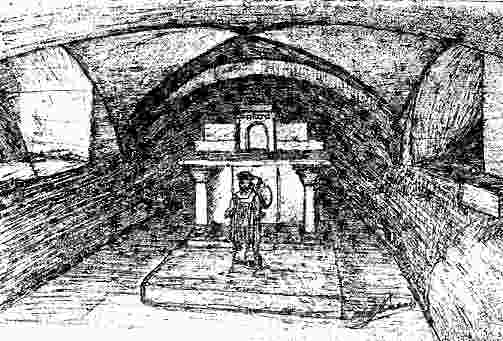
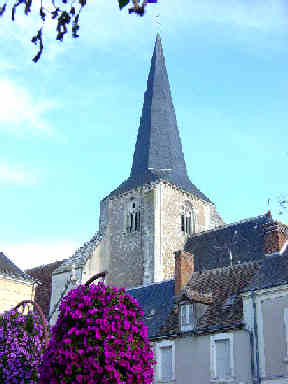
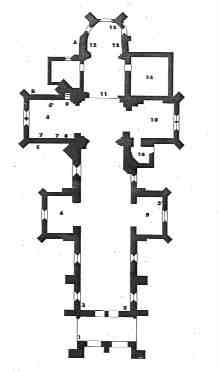
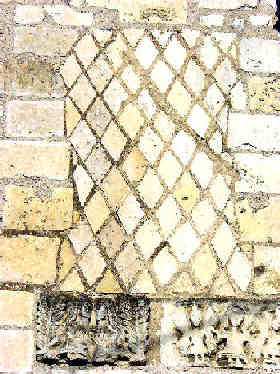
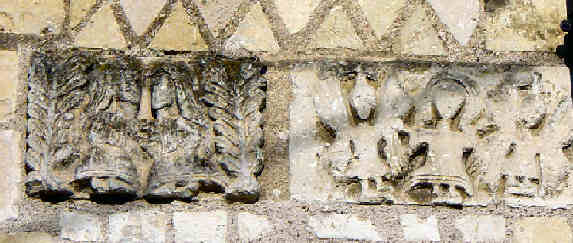
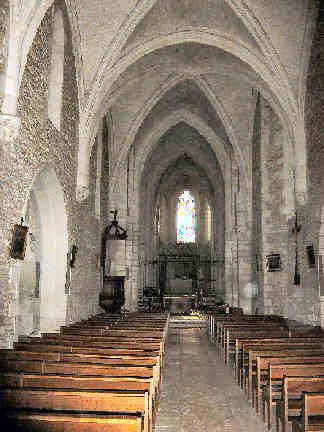
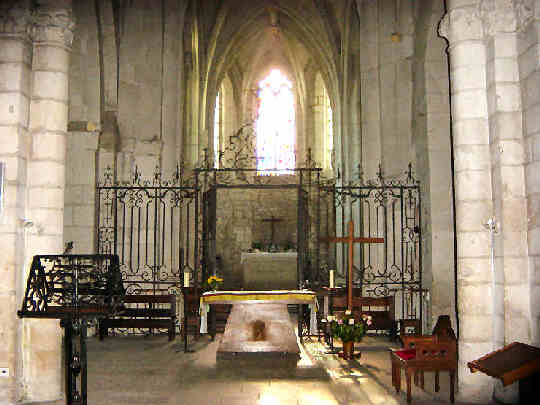
The church, dedicated to Phalerius dates from the 11th and 12th centuries. The apse, chancel, chevet, transept and narthex are Romanesque. The tower and the vault of the nave were built in the 15th century. The chapels were added in the 16th century. Part of the walls of the apse and north arm of the transept are in Carolingian herringbone pattern. The chancel is built on a crypt which houses the tomb of St. Phalerius
The Hounds of Mr. St. Phalier
King Louis XI while he was staying at Plessis-les-Tours, had a terrifying foreboding that his death was nigh and decided to go to Chabris to pray in front of the tomb of Phalerius, known in the region as St. Phalier.
During the journey, a terrible thunderstorm broke out, threatening the king and his escort.
Then they began to hear the sound of bells louder than the claps of thunder. The storm suddenly dissipated and the clouds in the sky parted to reveal a rainbow on the horizon.
King Louis XI, from his litter, called to an old shepherd who was standing by the roadside. "My good man," he said, "What is this spire yonder and where does the loud bell ringing come from?"
"Sire," the peasant replied, "the spire is that of Chabris, and what you heard was the barking of the faithful hounds of St. Phalier chasing the devil."
The King was puzzled. "What do you mean by the hounds of St. Phalier?"
"This is the name we gave to the bells of the parish church." said the peasant, " They can follow a trail better than bloodhounds and can scare away demons and storms."
When they reached the front of the church, the king and his escort saw a crowd surrounding a woman who was writhing on the ground in horrible convulsions. The King asked a villager what had happened?
"Do not approach her, Sire, do not go near her," he cautioned. "She is a witch, possessed by Satan. She boasts of being able to summon up and command the powers of the air. Thus, when today's storm broke out over the parish, she was laughing, dancing and prancing, enjoying the rain and lightning while we took shelter in the church or in our homes. But she had not reckoned with the hounds of St. Phalier! As soon as the blessed bells started ringing in order to ward off the storm, her face turned red then as pale as death, she staggered and fell, writhing in the convulsions you can still see now. I hope, with God's help, that this will teach her a lesson!"
THE PAINTED BAS-RELIEFS
The lateral walls of the chancel are decorated with late 17th or early 18th-century painted bas-reliefs
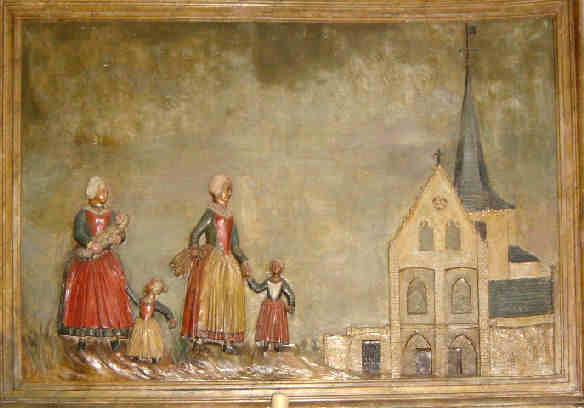
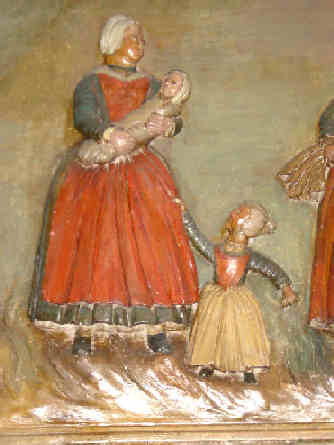
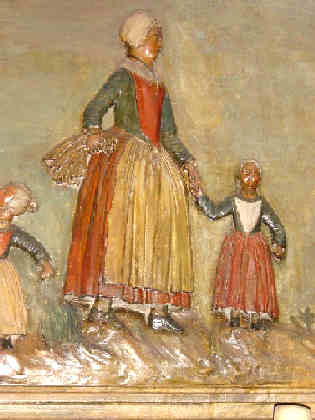
The costumes of 17th-century women and children and the particular way of swaddling babies are faithfully represented
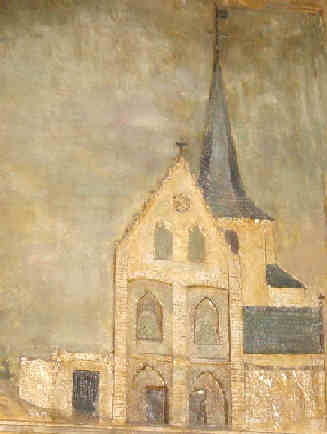
The Raising of Lerian by St. Phallier in Jerusalem
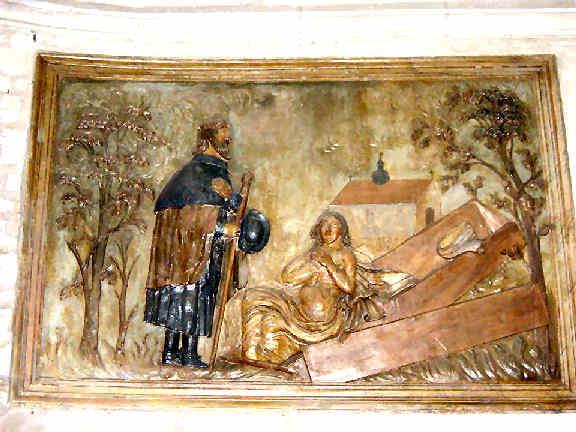
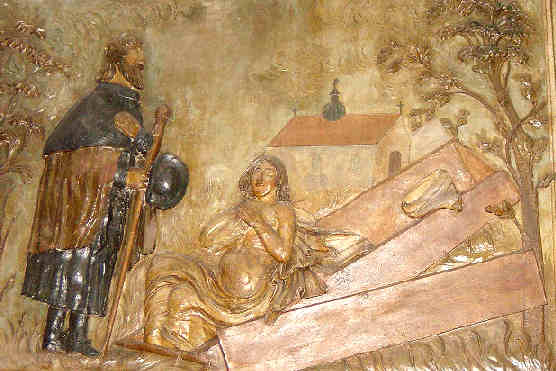
As soon as St. Phalier arrived in the town of Jerusalem, he went straight to the Temple to give thanks to God, and having said his prayers, he visited the Holy Sepulchre and other holy places with extreme devotion and reverence. Now, one day, as he was praying most fervently in front of the Holy Sepulchre, he had an extraordinary vision: a soul was about to appear before the tribunal of the Divine Majesty and with pathetic and pitiful cries, was begging for his help! It had become so aware of its sins as it left its body, so close it could feel the Enemy, that it considered itself as already condemned to the torments of Hell. Whereupon the holy man, prostrating himself before the Holy Sepulchre, prayed to God to spare this soul, begging for forgiveness and remission in the name of Our Saviour, who had shed His blood for men's souls. So it was, by the intercession of the saint, that the man's soul was absolved from its sins and was reunited to its body in order to do penance here on earth. The young man's name was Lérian and he was raised from the dead. He was so grateful to the holy man that he became his companion to help him in any way he could. (After François Bruneau 1643)
HOME PAGE
Location and nearby churches
- Saint-Loup-sur-Cher 12 km
- Couddes 23 km
- Saint-Aignan-sur-Cher 25 km
- Brinay 35 km
- Sainte-Lizaigne 37 km
- Le Liget (Chemillé-sur-Indrois) 40 km